Social Connection Beyond Words: How Caregivers Utilize Nonverbal Communication for Primary Progressive Aphasia
Primary Progressive Aphasia (PPA) is a rare neurological condition within the broader spectrum of Frontotemporal Dementia (FTD). While most cases appear in adulthood, some forms of FTD can impact individuals as young as 15.
As PPA progresses, it primarily disrupts the brain’s language center, making it increasingly difficult for individuals to speak, recall words, or express their thoughts verbally. These language changes can be challenging not only for the person living with PPA but also for their family members and caregivers who are trying to stay connected and understand emotional needs without relying on words.
At Joyful Companions, we recognize how meaningful communication remains, even when speech becomes limited. Through social activities, creative expression, and calm, reassuring presence, our team helps individuals with PPA stay engaged and supported when their primary caregivers are away.
Our non-medical companions are trained to support emotional well-being through intentional connection. We’re here to help your family navigate PPA with confidence and care.
Below, we’ll explore how PPA affects language, highlight effective nonverbal communication techniques, and share how our companions help families maintain connection and comfort throughout the PPA journey.
Primary Progressive Aphasia & Language
Primary Progressive Aphasia is a degenerative condition that gradually impacts the brain’s language center, making everyday communication feel unfamiliar and overwhelming.
If you or someone close to you has recently received a PPA diagnosis, take a moment to breathe. Patience will become your most valuable tool moving forward.
There are three main types of PPA, each affecting language skills in different ways:
-
Nonfluent/agrammatic PPA: Speech becomes effortful and “telegraphic,” with shortened phrases and difficulty forming sounds. Some individuals may also experience swallowing or movement challenges.
-
Semantic PPA: Comprehension declines, making it difficult to understand or recall the names and meanings of objects. Changes in empathy may also occur.
-
Logopenic PPA: Word-finding becomes difficult, and individuals may struggle to repeat phrases or recall information, sometimes accompanied by memory concerns.
Across all forms, declining access to language can make communication feel frustrating for both the individual and their support system. This is why exploring alternative communication strategies is essential: it helps preserve connection even as speech skills change.
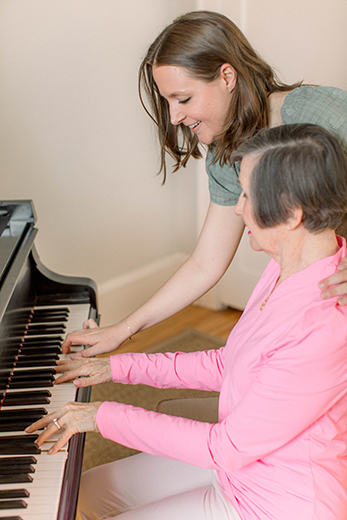
Creative activities like art and music are especially powerful tools for communication without words, and our companions are here to help you explore these meaningful outlets.
PPA Communication Techniques
Supporting someone with PPA requires a thoughtful, flexible approach to communication.
Here are practical strategies caregivers and loved ones can begin using today:
-
Lead with patience, always.
-
Ask either/or questions instead of open-ended ones.
-
Use affirming statements such as “Take your time, I can wait.”
-
Incorporate gestures, drawings, or picture boards for common items or activities.
-
Simplify language by choosing shorter sentences and familiar words.
-
Reduce background noise so the individual can focus more easily
-
Maintain face-to-face communication and speak slowly.
-
Note and avoid triggers that increase anxiety or overwhelm.
-
Use compensatory strategies like cueing, describing the word, or clarifying the meaning.
While this list isn’t exhaustive, it provides a strong foundation. If your loved one is in the early stages of PPA, practicing these techniques consistently can help establish reliable communication patterns before symptoms progress.
Non-Medical Caregivers & Support After a PPA Diagnosis
Supporting someone with PPA extends far beyond spoken language. Many individuals living with communication challenges experience feelings of isolation, sadness, or emotional fatigue, especially when meaningful connections become harder to achieve.
At Joyful Companions, our non-medical companions are trained to provide supportive, relationship-centered care that helps your loved one stay engaged and emotionally grounded.
Whether through warm conversation, creative expression, gentle physical activity, or participation in social events, our companions give individuals with PPA multiple ways to connect and express themselves.
Schedule a Consultation With Joyful Companions in Minnesota
If you’re building a circle of support around a loved one living with PPA, Joyful Companions is here to be part of that team. Our compassionate caregivers bring patience, presence, and genuine connection into every visit, helping your loved one feel understood, engaged, and supported.
To learn more about our non-medical companion services, call 763-544-0401 or request a free consultation online.